
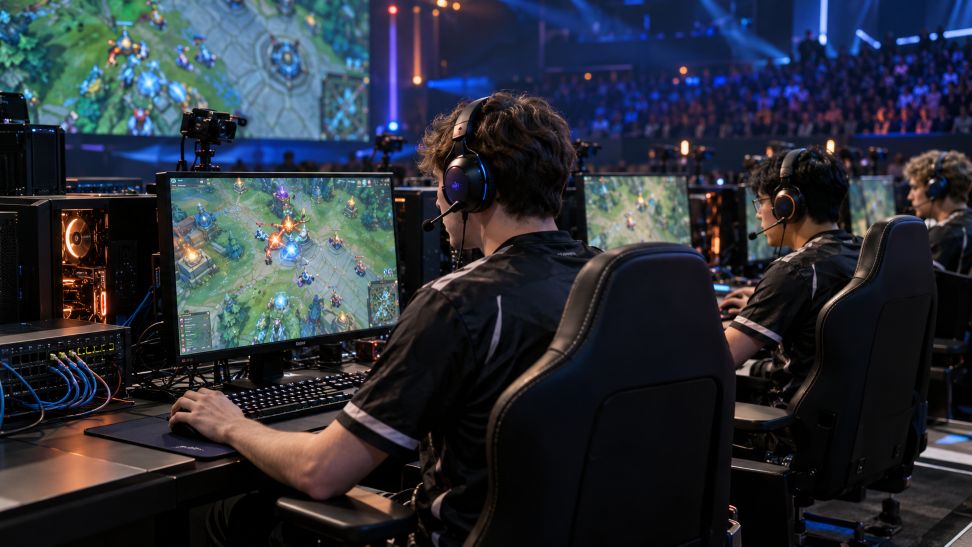
Competitive multiplayer online battle arena (MOBA) games rely on advanced software to evaluate player skill and organize balanced matches. Games such as Dota 2 involve complex teamwork, changing strategies, and individual decisions. A single victory rarely reflects someone’s complete ability. Ranking systems must therefore examine results over time while accounting for differences in experience, performance, and player behavior.
Ranking progression has also created interest in third-party services. Some players encounter Dota 2 boosters when researching account-based ranking assistance, duo queue arrangements, or coaching. These services operate outside official matchmaking systems and have different implications for competitive fairness. Understanding the technology behind rankings helps explain why accurate skill measurements matter and how external assistance can affect competitive balance.
Matchmaking rating (MMR) algorithms estimate player ability using competitive results. Their purpose is to place participants against opponents with reasonably similar skills.
In its 2023 New Frontiers update, Valve introduced a Glicko-based ranking system for Dota 2. This replaced an earlier approach based on modified Elo calculations. The updated system considers both estimated rank and rank confidence.
Rank confidence reflects how certain the system is about a player’s estimated ability. It changes as new match results become available. Players returning after extended breaks may therefore experience adjustments as the system reassesses their performance.
Research from Microsoft Research also demonstrates how statistical uncertainty can improve skill estimation in multiplayer environments.
Competitive games generate considerable performance data. Developers and analytics platforms can examine kills, deaths, assists, objectives, match duration, and other gameplay events.
In Dota 2, performance analysis provides context beyond winning or losing. For example, support players contribute through vision, positioning, and team coordination. These contributions may differ substantially from those of damage-focused heroes.
Third-party analytical tools can help players identify recurring mistakes and track improvement. However, individual statistics should not automatically be treated as direct measurements of ranking ability.
Microsoft Research demonstrated this distinction through TrueSkill 2, which combines match outcomes with additional performance information. Its research illustrates how richer datasets can improve skill predictions.
Accurate skill ratings become useful when matchmaking software translates them into balanced teams.
Automated queue systems organize waiting players using available information such as skill estimates, geographic location, and matchmaking requirements. The challenge involves balancing competitive quality against reasonable waiting times.
A narrow skill range may produce closer matches but longer queues. Wider matching criteria can reduce waiting periods while increasing differences between participants.
Microsoft Research identifies this trade-off as an important consideration in multiplayer matchmaking design.
Dota 2 also uses specialized arrangements for highly ranked players. Its Immortal matchmaking changes introduced captain-based player drafting, recognizing that team composition and coordination can influence match quality.
Machine learning offers another way to examine complicated gameplay patterns. These systems identify statistical relationships across large datasets rather than relying entirely on fixed rules.
For competitive gaming, machine learning can support research into player performance, unusual activity, and possible mismatches between estimated and demonstrated skill.
Models could examine trends such as sudden performance changes, repeated unusual match outcomes, or differences between expected and actual results.
However, these findings require careful interpretation. Exceptional performance does not automatically indicate misconduct.
Research on TrueSkill 2 from Microsoft Research shows how incorporating additional gameplay information improves predictive accuracy. This provides a useful foundation for understanding more advanced analytical approaches, although it does not establish that Dota 2 uses every such technique.
Competitive ranking depends on reliable online infrastructure. Even accurate matchmaking cannot guarantee fair gameplay when network conditions create significant technical disadvantages.
Game servers coordinate player actions and maintain a shared representation of match events. Network synchronization helps ensure that participants receive consistent information about movement, abilities, and combat interactions.
Latency, packet loss, and unstable connections can affect responsiveness. Such problems may interfere with player decisions and influence match results.
Reliable infrastructure supports competitive fairness by reducing technical disruptions that could affect player performance. Software compatibility also influences how games operate across different devices and systems.
For example, gaming software compatibility plays an important role in emulation, where specialized programs allow older games to run on modern hardware. Although emulation differs from online matchmaking, both demonstrate how software design affects gaming experiences. In competitive MOBA environments, stable servers and accurate synchronization remain essential for maintaining fair matches.
Player skill is only one factor influencing match quality. Communication, cooperation, and disruptive behavior also affect competitive experiences.
Dota 2 includes behavior-related systems that help identify problematic conduct. Reports and behavioral information can support moderation and matchmaking quality measures.
Valve has explained that disruptive alternate accounts can undermine fair competition. Its September 2023 announcement reported permanent bans affecting approximately 90,000 smurf accounts.
Reputation systems help developers address misconduct that traditional skill ratings cannot measure. However, reporting mechanisms must account for inaccurate complaints and potential abuse.
Combining behavior information with competitive ratings provides a broader picture of match quality, without treating player conduct as equivalent to mechanical skill.
Anti-cheat technology protects rankings against manipulation. Detection systems can investigate unauthorized software, suspicious account activity, and unusual competitive patterns.
The Steam Online Conduct Rules explicitly prohibit cheating, smurfing, and artificially increasing matchmaking rank.
External progression services generally involve three different approaches:
These distinctions matter because manipulated ratings can introduce skill mismatches. Coaching presents a different model when it involves legitimate instruction rather than account access or arranged results.
Competitive ranking systems will continue evolving as developers improve statistical models, network infrastructure, and integrity monitoring.
Better analytics may help distinguish temporary performance changes from meaningful skill improvement. More transparent matchmaking information could also help players understand ranking adjustments without exposing systems to manipulation.
Ultimately, effective rankings depend on accurate measurements, trustworthy match results, and consistent enforcement. Technology can improve competitive balance, but responsible system design remains essential to maintaining confidence in ranked play.